Youth and Urban Decay: How an Iconic Chiang Mai Landmark Launched a Decade-Long Vision
In 2016, sitting in a photography classroom at San Diego City College, I received the piece of advice that every artist hears but few know how to anchor: “Shoot what you love.”
For years, my creative outlet had been rooted in the quiet, visceral world of urbex—exploring and capturing self-portraits inside abandoned places. But as I sat there after only a single semester of formal photography training, a new juxtaposition sparked in my mind. I loved the heavy, silent history of abandoned structures, and I loved the raw, untainted energy of childhood. What would happen if I brought them together?
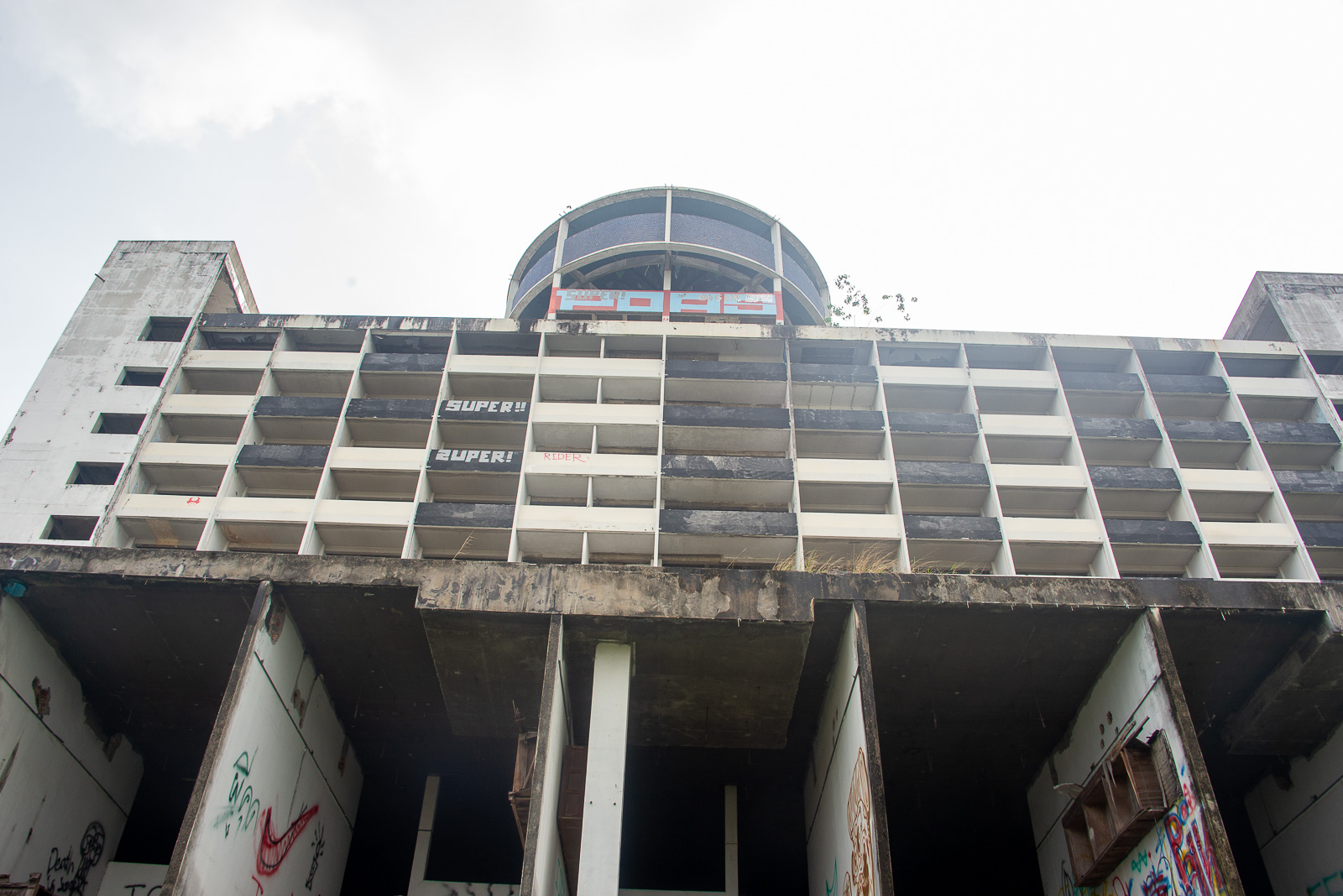
On paper, the concept of photographing children in derelict settings sounds jarring, even odd, without seeing the actual body of work. I knew the execution had to be perfect. For my very first session, I chose the famous “Ghost Tower” in Chiang Mai—a towering, incomplete concrete relic of the 1990s Asian financial crisis. It is iconic in the urban exploration community, but more importantly, it offered structural predictability. It was a monolith of solid concrete, not a rotting wooden home.
The Protocol of Safety and Trust
Because I was introducing a child into an unconventional environment, my process had to be meticulous. The day before the shoot, I scouted the location alone to map out safe paths and eliminate variables.
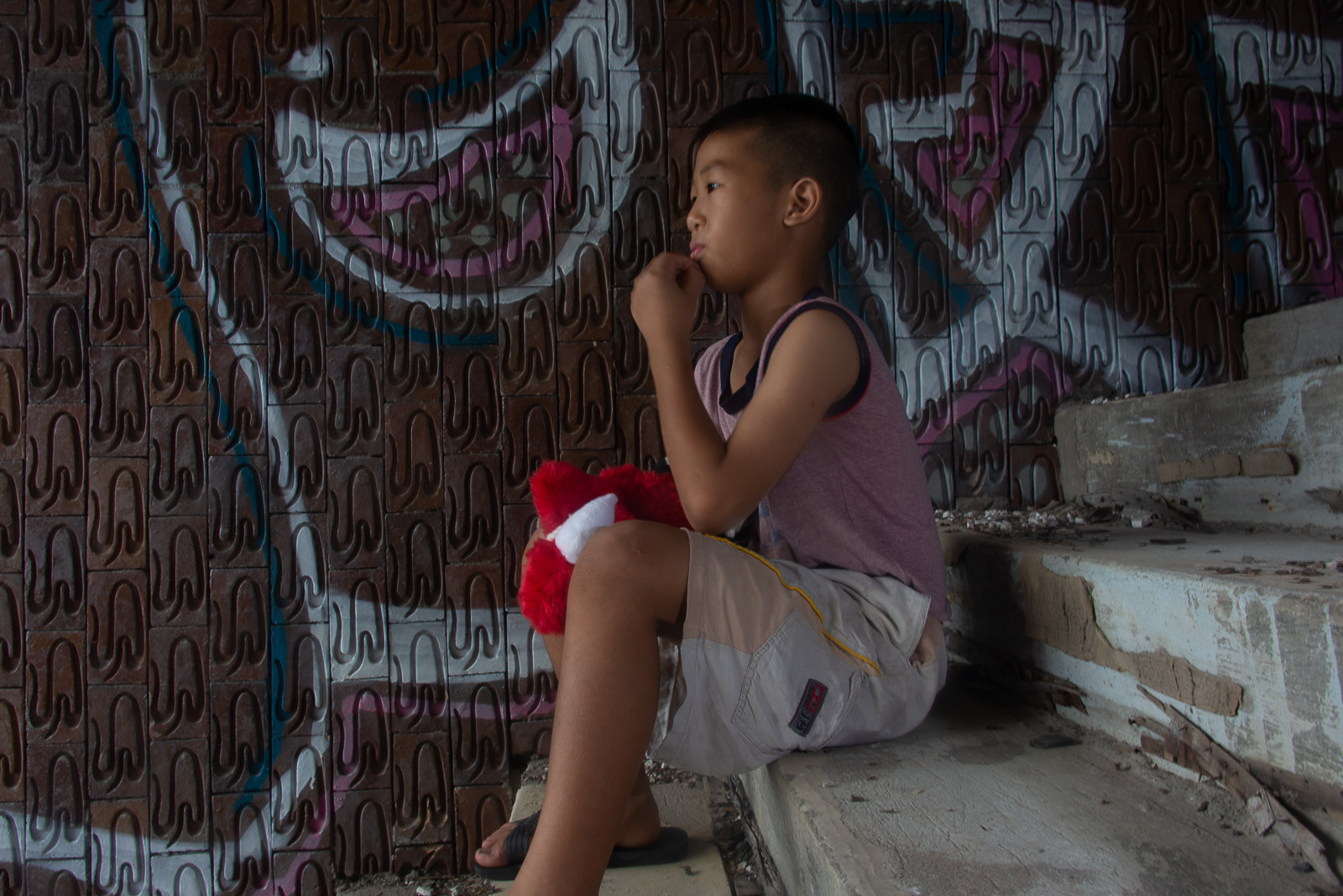
Through my driver, who acted as a translator and coordinator, I was connected with a young boy named Benz—the son of my driver’s friend. Our production studio for the morning was the back of a rumbling tuk-tuk. As we navigated the streets of Chiang Mai, I asked Benz through our translator if he was scared of the massive, empty tower looming ahead.
He just grinned. “No, I would sleep here by myself tonight!”
Deconstructing the Screen: The Story Behind the Shot
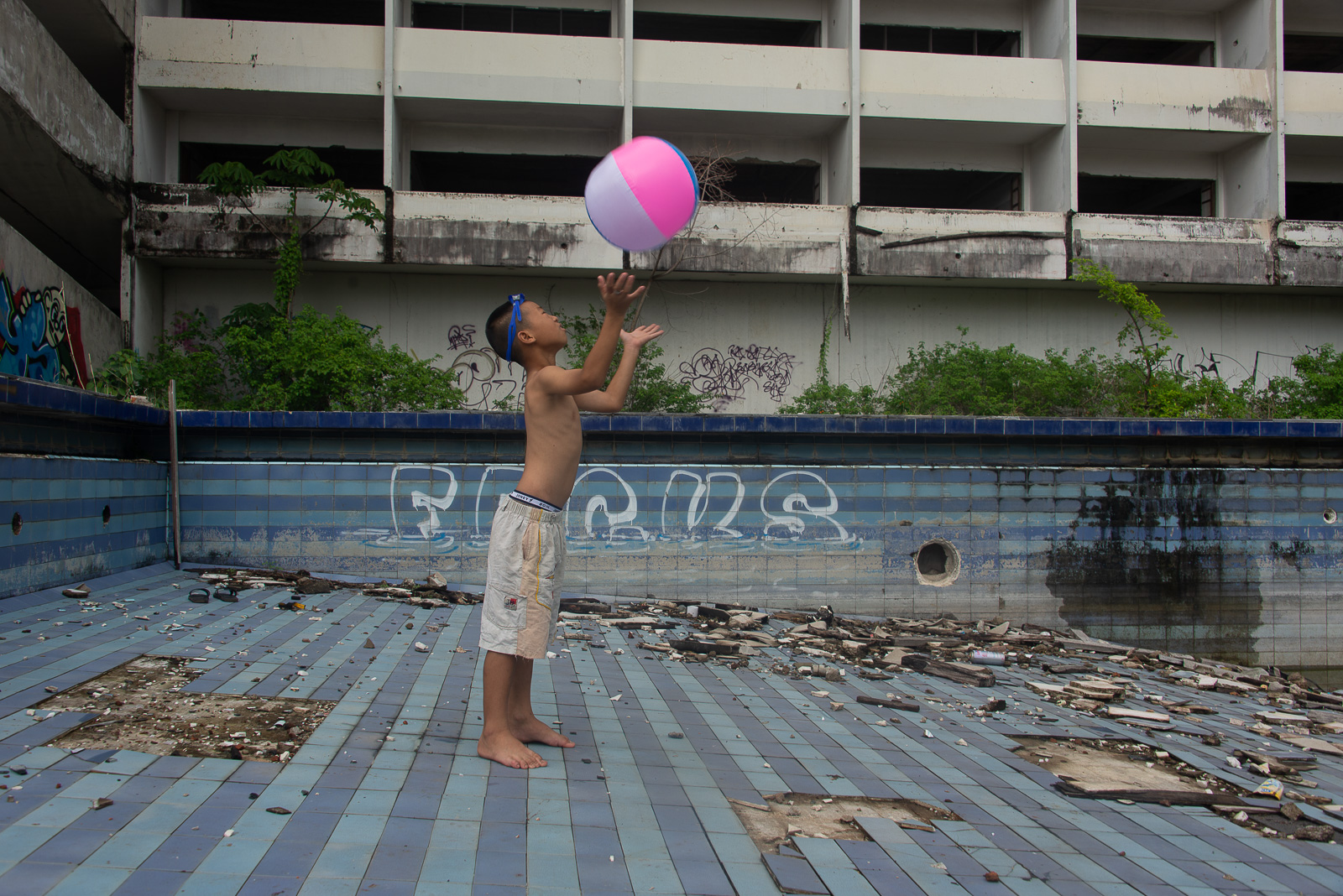
When we arrived, the dynamic of the shoot took shape. While I usually prefer to just let kids be kids in these vast, concrete playgrounds—like letting Benz toss a pink balloon in an empty, dry pool—this was the maiden voyage of the series. For safety, I provided careful direction, guiding his movements through the raw spaces.
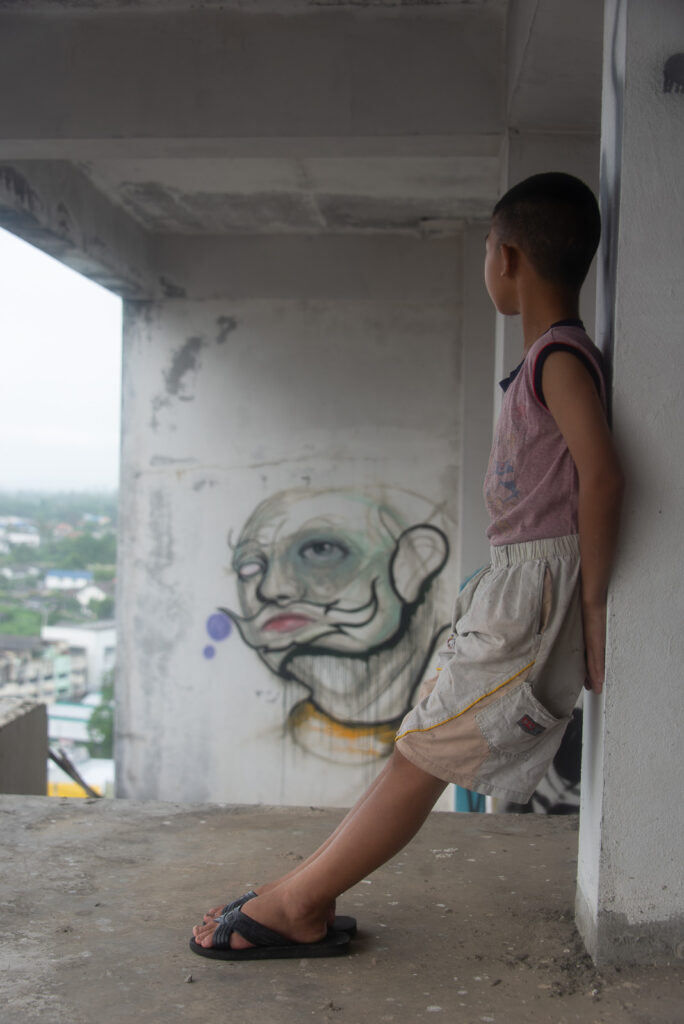
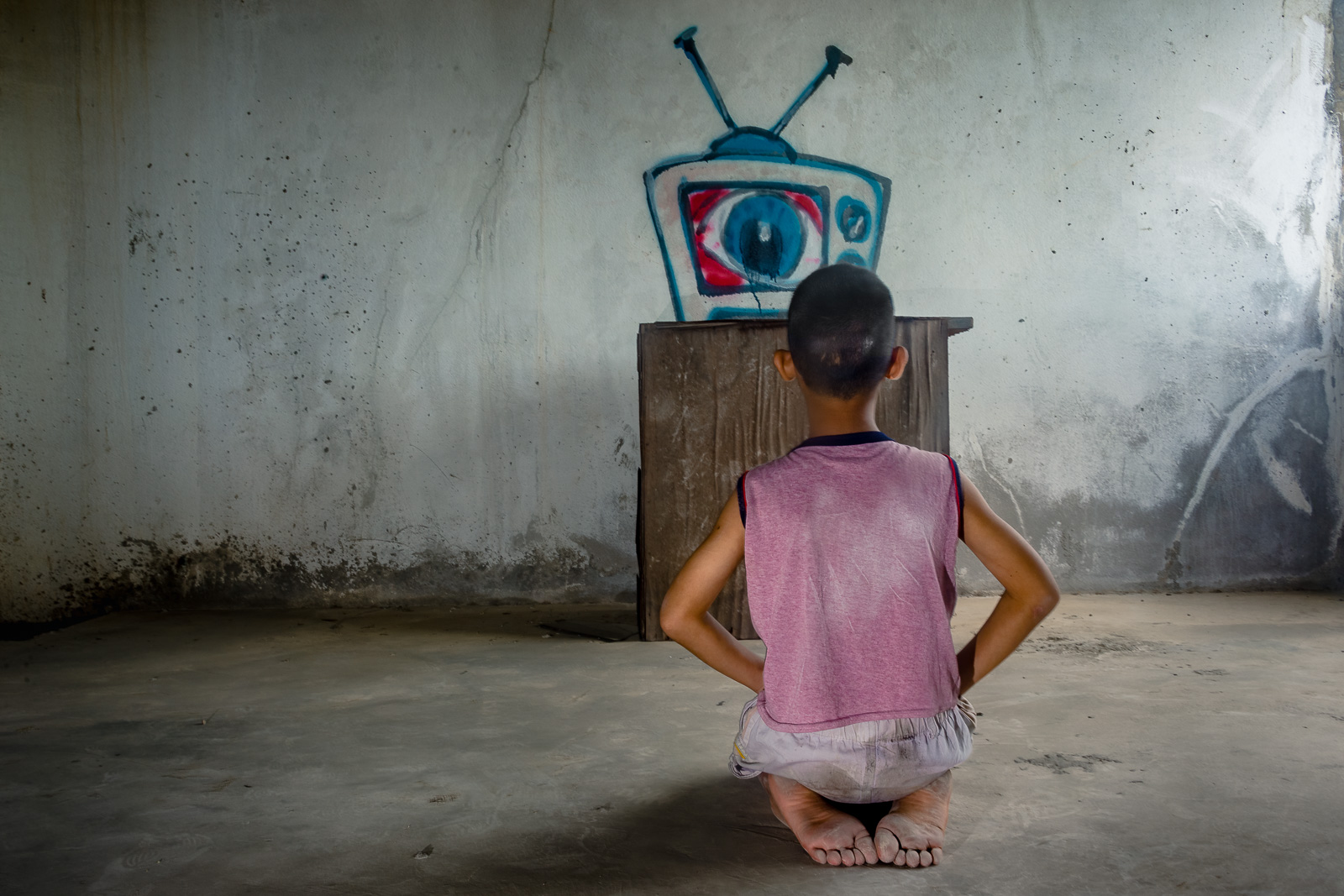
During my scouting trip the day prior, a specific room on the upper floors had caught my eye. On the bare concrete wall, an artist had painted a stylized television set. When I placed Benz in front of it, I decided to break the traditional conventions of portraiture. Instead of capturing his face, I dropped the camera angle and shot him entirely from behind.
That single frame—the painted television—unexpectedly became one of the most popular and recognizable pieces in the entire series to this day. Over the years, viewers have projected their own deep societal critiques onto it, viewing it as a deliberate statement on how modern society wastes its life staring at digital screens. In reality? It was simply an artist trying to push past the boundaries of a standard portrait.

The Catalyst for a Decade of Creating
Looking back now, a full decade later, that single morning in Chiang Mai holds an incredible weight.
That successful first session was the ultimate proof of concept. In the years that followed, as I continued to expand the Youth and Urban Decay series globally, that iconic image of Benz became my calling card. Whenever I approached parents in new locations to ask if their children could model for the project, I didn’t have to explain a strange concept with words. I just showed them the photo of Benz at the painted television.
From that moment on, I never had a single parent turn me down. What began as a student’s response to a professor’s prompt became a passport to a decade of unrestricted visual storytelling.